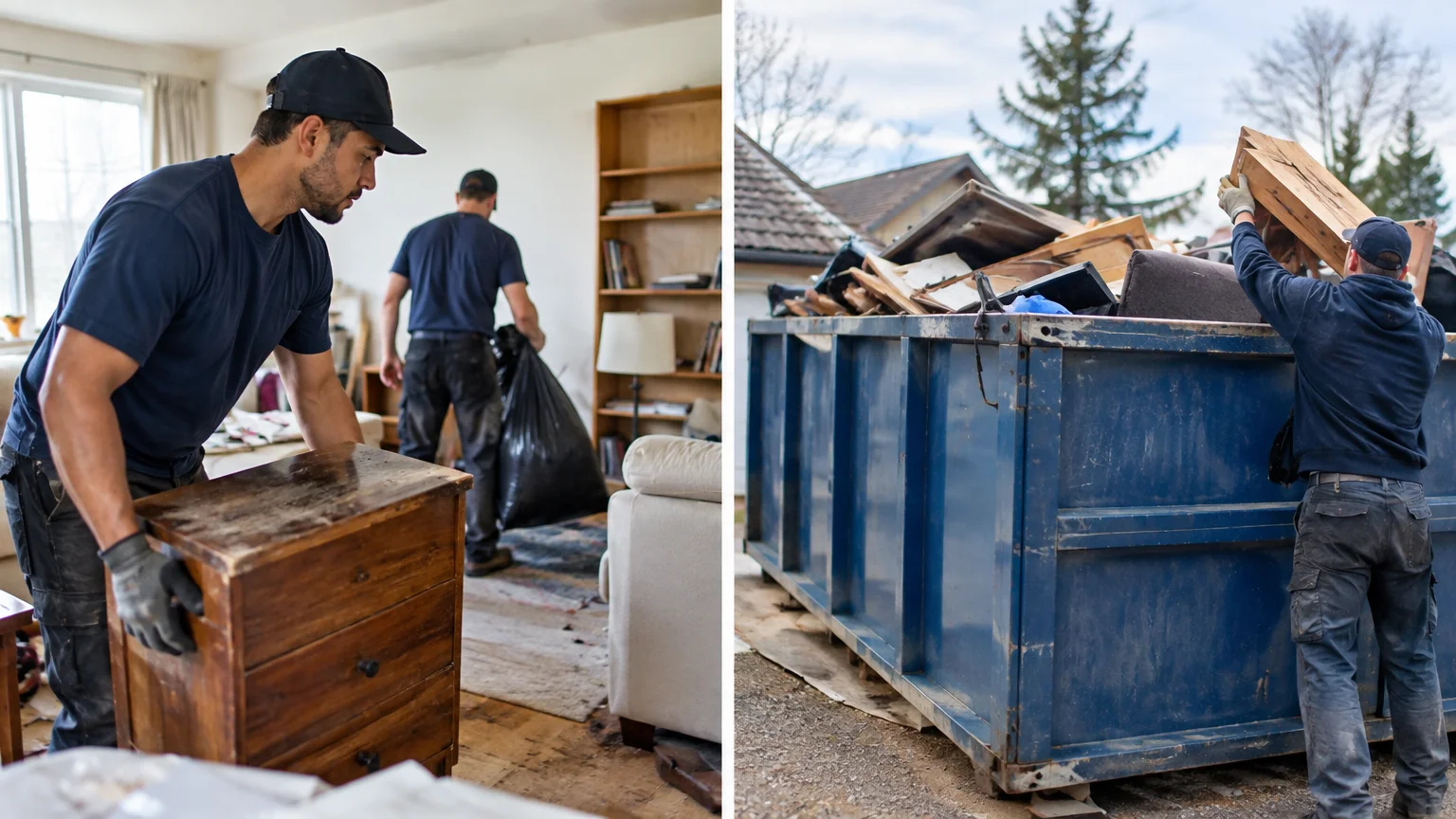
Retail removal vs dumpster rental depends on your store’s waste, space, staff, and deadline. Retail removal includes a crew that sorts, lifts, loads, and hauls unwanted items. A dumpster gives your team a container for self-loading debris. The better choice depends on who will do the work and how quickly the cleanup must finish.
What Is the Difference Between Retail Removal and Dumpster Rental?
Retail removal is a full-service choice for stores that need unwanted items taken away. A hauling crew brings the labor, loads the items, and removes them from the property. This can help with heavy fixtures, large displays, old furniture, or mixed backroom junk.
Dumpster rental is a self-service choice. A company drops off a container, and store staff or hired workers place the debris inside. The container is picked up later. This option may work well when a store has enough workers, a safe loading area, and several days for the project.
How Retail Removal Works for Stores and Commercial Spaces
With retail removal, the store team first marks the items that should go. These may include shelving, counters, racks, signs, boxes, broken displays, and office furniture. The removal crew can carry the items from the sales floor, stockroom, loading area, or other approved spaces.
This service can reduce the work placed on store employees. It may also help a manager stay on schedule during a remodel, closure, move, or seasonal reset. Upland Junk Removal provides commercial junk removal support for businesses that need a simple way to clear unwanted items.
How Dumpster Rental Works for Retail Cleanup Projects
A dumpster gives a store one place for approved debris. Staff members or contractors load it as work continues. This may suit a longer cleanup with a steady flow of light waste, such as cardboard, trim, packaging, or small renovation debris.
The store must plan where the container will sit. The site needs room for delivery, pickup, doors, customers, and nearby businesses. The rental company may also restrict some materials. Before choosing this option, managers should ask about accepted items, fill lines, access rules, rental timing, and local placement needs.
Which Option Is Better for Store Fixtures, Displays, and Backroom Junk?
Retail removal is often easier for large, heavy, or mixed items. A dumpster may work better when a store has workers ready to load similar debris over time. The right choice depends on the waste type and the people doing the physical work.
Store fixtures can include wall panels, checkout counters, display cases, racks, mannequins, and signs. These items may be hard to move around doors, floors, and glass. A full-service crew can reduce the lifting burden and help keep the removal area neat.
When Retail Removal Is the More Convenient Choice
Retail removal may fit a store that needs a fast change with little staff effort. It can help during a lease turnover, store closure, office move, or backroom cleanout. It may also suit a shop with limited parking or no good place for a large container.
A store may choose this service when it has mixed materials. One project might include furniture, appliances, electronics, cardboard, shelving, and general junk. Appliance Removal may help with old refrigerators, freezers, washers, or other large equipment. Items that contain refrigerant need proper handling, so stores should not place them in a container without checking the rules.
When a Dumpster May Work Better for Ongoing Debris
A dumpster may help when a contractor or store crew works for several days. It gives workers one nearby place for approved debris as the project moves forward. This can make sense for a remodel that creates a steady amount of similar waste.
Still, the store must manage loading, sorting, and safe access. Workers may need to break down items, move heavy pieces, and keep debris below the fill line. A dumpster is not a replacement for a removal crew when the store lacks labor or has large items that are hard to move.
How Do Retail Removal Costs Compare With Dumpster Rental Costs?
There is no single answer for which option costs less. Retail removal costs depend on the job. Dumpster rental costs depend on the container, rental period, location, materials, and added services. The actual price should be confirmed with the provider after the project details are reviewed.
A store should compare the full project, not only the basic service charge. Staff time, lifting help, loading tools, parking, permits, delays, and cleanup can affect the total value of either option. A lower starting charge may not save money if the store must add labor or keep the site open longer.
What Affects the Price of Commercial Junk Removal
Commercial junk removal may depend on the amount and weight of the items. It may also depend on the number of workers needed, the distance to the truck, stairs, narrow doors, and special handling needs. A store with bulky fixtures may need more labor than one with light boxes and packaging.
The material mix matters too. Electronics, appliances, mattresses, construction debris, and other items may have different handling rules. A manager should make a clear item list before asking for project details. Upland Junk Removal can help Upland businesses understand which details matter when planning commercial junk removal.
Additional Dumpster Rental Costs and Responsibilities to Consider
Dumpster rental may involve more than the container itself. A store should ask about delivery, pickup, rental length, extra days, excess weight, restricted materials, and placement rules. Local property rules may affect where the container can sit.
The store remains responsible for loading the container safely. Workers should not overfill it or place heavy materials unevenly. They should also protect customers, workers, doors, walls, and nearby vehicles during loading. These duties can make full-service removal more useful when the cleanup is large or time-sensitive.
How Should You Choose the Right Cleanup Option for Your Store?
The right choice starts with the waste type, schedule, space, and labor available. Retail removal often fits fast projects with bulky or mixed items. Dumpster rental may fit longer projects with steady debris and a reliable crew.
A store manager should also think about customer safety and daily work. The plan should keep walkways clear, protect merchandise, and avoid blocked delivery areas. For a larger change, Office Cleanout or Commercial Junk Removal may help when retail and office areas need work together.
Questions to Ask Before Scheduling Retail Junk Removal
Before choosing a service, a manager can review these points:
- Which items need removal, and which items will stay?
- Are there heavy fixtures, glass, appliances, electronics, or large displays?
- Who will carry the items from the sales floor or backroom?
- Where can a truck or dumpster safely reach the property?
- Does the project need to finish before customers or contractors return?
- Are any materials subject to special disposal or recycling rules?
Clear answers help the provider understand the job. Photos, an item list, floor access details, and a preferred work window can help too. The store should ask how the crew handles donation, recycling, and disposal when those options apply.
Planning a Safe and Efficient Store Cleanout
A safe cleanout starts with a simple plan. The store should mark items for removal, protect surfaces, and keep customers away from active work areas. Staff should not lift items that are too heavy or awkward for them.
The manager should schedule the work around deliveries, shoppers, and other trades. A clear path can help workers move items without harming walls or floors. Upland Junk Removal serves commercial properties in the main Upland area, including Downtown Upland and San Antonio Heights, as well as Rancho Cucamonga, Ontario, Claremont, Montclair, and nearby communities. The team can help store owners review a plan that fits the site.
Key takeaways
- Retail removal includes labor, loading, hauling, and site cleanup support.
- Dumpster rental gives a store a container but usually requires self-loading.
- Full-service removal may fit heavy fixtures, mixed junk, or short deadlines.
- A dumpster may fit steady debris when a store has workers and space.
- The best choice depends on materials, access, labor, timing, and site rules.
Frequently Asked Questions
Can a junk removal crew take retail displays and shelving?
Yes, many commercial junk removal crews can take retail displays, shelving, counters, racks, and other unwanted fixtures. The store should explain the item types, sizes, weight, and access points before scheduling. Glass, appliances, electronics, and other special items may need separate handling instructions.
Can a store put appliances in a dumpster?
Not always. Dumpster rules vary by provider and material type. Refrigerators, freezers, and other appliances may need special handling because of refrigerant, electrical parts, or recycling rules. A store should ask the rental company first instead of placing these items in a container without approval.
What is a commercial cleanout service?
A commercial cleanout service removes unwanted items from a business property. It may include furniture, fixtures, boxes, electronics, appliances, and general debris. The service can support a move, remodel, closure, lease turnover, or backroom project while reducing lifting work for store employees.
Is retail removal better than dumpster rental for a store closure?
Retail removal may be better when a store needs fast labor for fixtures, furniture, displays, and mixed junk. A dumpster may fit a closure managed by an on-site crew over several days. The store should compare labor, access, timing, accepted materials, and cleanup duties before deciding.
Conclusion
Retail removal vs dumpster rental is a project choice, not a one-size-fits-all answer. A dumpster can work for steady debris and a capable store crew. Full-service retail removal can work better for heavy fixtures, mixed items, tight deadlines, or limited staff.
A clear item list and site plan can make the choice easier for stores in Upland. Upland Junk Removal can help business owners review the work and select a practical next step. Contact us to discuss a retail cleanup plan for your store.