Office furniture removal vs dumpster rental comes down to labor, space, waste, and timing. Professional furniture removal handles lifting, loading, hauling, and cleanup. A dumpster may work for renovation debris when your team has space and enough workers to load it. The right choice can keep an office cleanout safe and on schedule.
A workplace cleanout may seem easy at first. Heavy desks must pass through halls, doors, and elevators. Business owners must also protect floors, keep exits open, and limit risks for staff. The best option depends on the furniture, building, schedule, and waste involved.
Upland Junk Removal helps businesses and property owners plan furniture pickup and nearby areas. This guide explains how both choices work and what to review before booking either one.
Table of Contents
- What Is the Difference Between Office Furniture Removal and Dumpster Rental?
- When Is Office Furniture Removal the Better Choice?
- When Does a Dumpster Make More Sense for Office Furniture?
- How Much Does Office Furniture Removal Cost Compared With a Dumpster?
- What Happens to Office Furniture After It Is Removed?
- What Should Businesses Consider Before Choosing an Option?
- Which Office Cleanout Option Is Right for Your Business?
- Frequently Asked Questions
What Is the Difference Between Office Furniture Removal and Dumpster Rental?
Office furniture removal includes the work needed to carry, load, haul, and manage unwanted items. A dumpster only provides a container. The customer usually moves the waste and loads it. This basic difference affects safety, time, space, and the work required from employees.
How professional furniture removal works
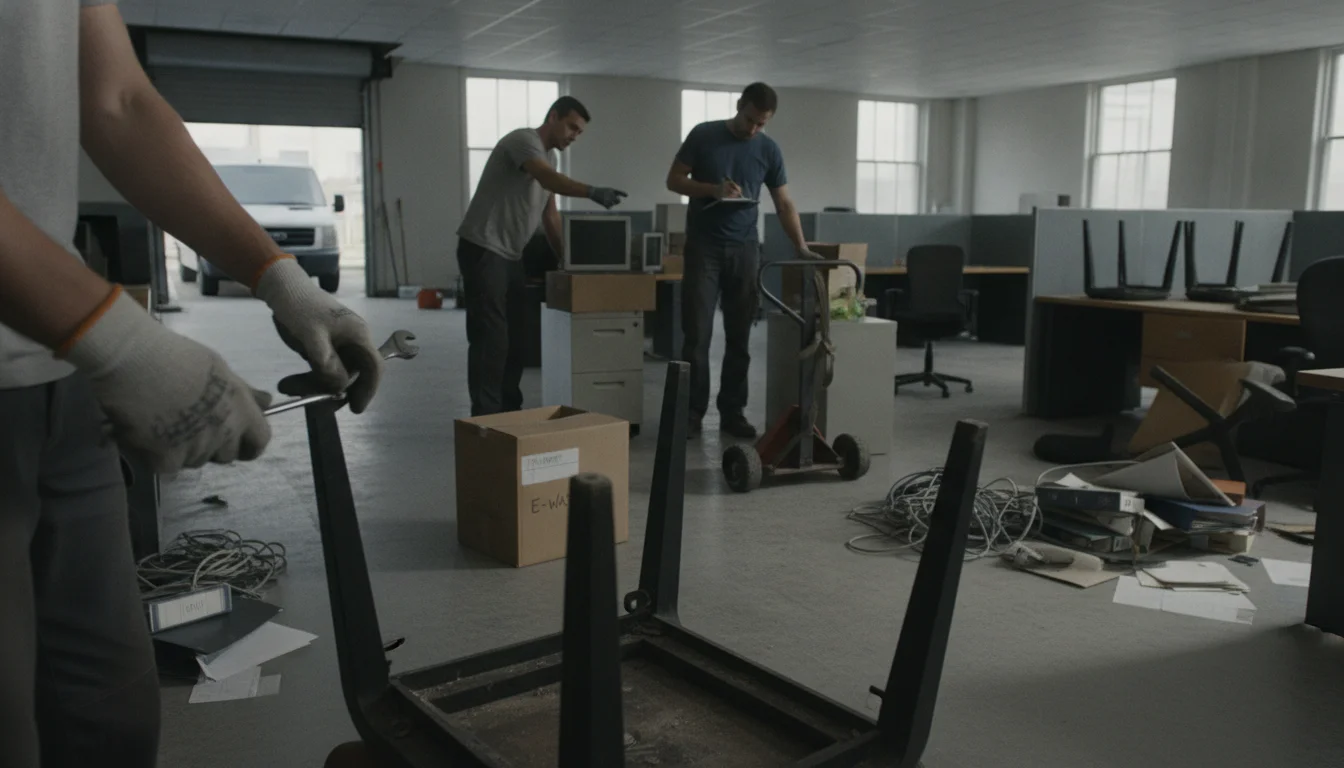
A removal team reviews the items and pickup area first. The crew then plans a safe route through the office. It moves the furniture, loads the truck, and clears loose debris from the work area. This can help with desks, cubicle panels, filing cabinets, and conference tables.
Professional furniture removal may also limit work delays during a move or office upgrade. Employees can keep working instead of lifting large items. The crew may also sort items for reuse, recycling, or proper disposal when possible.
Upland Junk Removal helps businesses plan these jobs around building access and work hours. This matters when a leased office must be cleared by a set date. It also helps when the property has stairs, a small elevator, or a long path to the loading area.
How dumpster rental works for business cleanouts
A dumpster is delivered to a suitable place, such as a parking area or loading zone. Staff, contractors, or movers then break down and carry items into the container. The provider removes the filled container based on the rental schedule.
This option takes careful planning. The business may need permission to use shared property. It may also need to protect pavement and keep the container away from doors or fire lanes. Large desks and tables may need to be taken apart before they fit inside.
A dumpster does not include the labor needed to move furniture. Employees must have the time, tools, and strength to do that work. If they do not, direct pickup may be the safer choice.
When Is Office Furniture Removal the Better Choice?
Office furniture removal is often the better choice when a business needs lifting, loading, and haul-away help. It fits projects with tight deadlines, limited staff, hard access, or many large items. It can also lower the risk of injuries and damage to the building.
Advantages for desks, cubicles, and conference tables
Desks and conference tables can be heavy and wide. They may be hard to carry through narrow doors and halls. Cubicles can include panels, frames, shelves, and wiring parts. A trained crew can plan how to separate and move these pieces safely.
Removal service also helps when furniture must leave a leased office quickly. The team can follow a planned route and load items in an orderly way. This can help during a relocation, downsizing project, renovation, or property turnover.
Some furniture also has parts that should not be mixed with every type of waste. A removal team can review the items before work begins. This makes it easier to identify furniture, electronics, and other materials that may need separate handling.
Situations where speed and labor matter most
Businesses often choose removal help when employees cannot spend hours hauling. The same is true when a building has stairs, long halls, small elevators, or limited loading access. Help may also be useful after an eviction, closure, or sudden office change.
Upland Junk Removal works with property owners and business teams when large items must leave on a clear schedule. Office Cleanout and Commercial Junk Removal can support larger projects with furniture and other unwanted materials.
This option may also fit a small office with only a few heavy items. A dumpster can take more planning than the job itself. Direct service lets the business focus on records, staff, customers, and the next stage of the move.
When Does a Dumpster Make More Sense for Office Furniture?
A dumpster may make more sense when a business has a large amount of mixed waste and enough labor to load it. It can fit a renovation, demolition, or major build-out where furniture is only part of the debris. The site must also have a safe place for the container.
Projects that produce mixed renovation debris
A dumpster may hold some project waste, such as broken flooring, drywall, packaging, and damaged fixtures. This depends on the provider’s rules. It can work well when contractors already manage the site and have workers available for loading.
Businesses should ask about accepted materials before ordering. Some containers do not take electronics, chemicals, appliances, tires, or other restricted items. Heavy waste may also have weight limits or special loading rules.
Furniture may need to be broken down before it goes into the container. Workers should remove drawers, take apart large frames, and place heavy pieces with care. They should never overload the container or leave waste above its safe fill line.
Space, access, and loading requirements
The container needs a level placement area. There must be enough room for delivery and removal. It should not block exits, sidewalks, fire lanes, customer access, or nearby parking. A business may need approval from a landlord, property manager, or local authority.
Loading also takes time. Workers may need to dismantle desks, carry parts outside, and spread weight evenly. If there is no safe loading team, professional furniture pickup may be a better fit than a container alone.
Upland businesses should also plan around busy streets, shared parking, and building hours. A container may be hard to place at some office sites. These limits can make professional hauling the simpler option.
How Much Does Office Furniture Removal Cost Compared With a Dumpster?
Costs vary for both choices, so businesses should compare the full work involved. Furniture removal may reflect labor, item volume, access, travel, and disposal needs. Dumpster use may include delivery, rental time, disposal, weight, and added charges set by the provider.
What affects the cost of furniture removal
A removal service may review how many items need pickup and how hard they are to move. Stairs, elevators, long carrying distances, narrow doors, and limited parking can affect the work. Special handling for electronics or restricted materials may also change the service plan.
The final amount depends on the project and is confirmed when the business gets in touch. Businesses should describe the furniture, location, access points, timing, and mixed waste before scheduling.
The amount of labor is a key part of the comparison. A dumpster may look simple, but staff time still has value. Businesses should include the time needed to move furniture, rent tools, protect floors, and clean the area afterward.
Dumpster rental fees and additional expenses
Dumpster costs can depend on the container size, rental period, local disposal rules, and material type. Extra charges may apply if the container is overloaded, kept longer than planned, or filled with restricted materials. The business also supplies the labor and tools needed to load it.
A fair comparison includes employee time, possible equipment rental, site preparation, and cleanup. A dumpster may work well for some projects. Direct pickup may reduce planning and physical work for others.
Businesses should also ask what happens if the project takes longer. A delayed renovation may need a longer rental period. A tight lease deadline may make a scheduled removal service easier to plan.
What Happens to Office Furniture After It Is Removed?
After removal, furniture may be sorted for reuse, donation, recycling, or disposal. The best path depends on the item’s condition, material, local rules, and demand. Businesses should not assume every item can be donated or recycled.
Donation, reuse, recycling, and disposal options
Usable desks, chairs, shelves, and tables may be offered to donation groups, resale outlets, schools, or community programs. Clean metal parts may enter a recycling stream. Some wood and plastic pieces may need separate handling. Broken or unsafe furniture may require disposal.
Sorting items before pickup can help, but businesses may not have time for detailed preparation. A removal team can explain what information is needed. It can also explain whether materials should be separated before the appointment.
Before the cleanout, label items that should stay. Set aside furniture that may be reused. Keep personal records and sensitive files away from the pickup area. These small steps can help prevent mistakes during a busy office move.
Handling electronics, mattresses, and regulated materials
Office cleanouts may include monitors, printers, batteries, appliances, or other electronics. These items often need a different recycling or disposal path than ordinary furniture. A business should identify them early and ask whether the selected provider accepts them.
Mattresses, chemicals, paint, fuel, medical waste, and some building materials may also have special rules. Businesses should never place unknown liquids or dangerous items in a dumpster. When unsure, the property owner should check local guidance or ask the provider before pickup.
Keeping these materials separate can also protect workers. It gives the business a clear list of items that need another solution. This is safer than placing everything in one container.
What Should Businesses Consider Before Choosing an Option?
Businesses should compare volume, timing, labor, access, building rules, and material types. No single option works for every office. A short site review can prevent delays and help the business choose a safe plan.
Evaluating volume, timing, labor, and access
Start by listing the main items. Include desks, cubicle panels, chairs, tables, shelves, cabinets, appliances, and loose junk. Then note how many workers can help, when the space must clear, and whether items need dismantling.
Access matters as much as volume. A third-floor office with a small elevator may need more planning than a ground-level suite with a loading dock. Photos, measurements, parking details, and building hours can help the provider prepare.
The business should also note which items are unusually large or heavy. A conference table may need a special route. A tall cabinet may need to be emptied or taken apart. Sharing these details early can reduce delays.
Planning around employees, tenants, and building rules
Office removal should not block customer paths, shared halls, loading areas, or emergency exits. Property managers may require proof of insurance, certain service hours, floor protection, or advance notice. Tenants may need permission before placing a dumpster on shared property.
The business should tell staff when the work will happen. Keep people away from active loading areas. Clear planning helps protect workers, visitors, furniture, walls, floors, and doors during the cleanout.
In Upland, many business sites share parking and access roads. A plan should account for other tenants and nearby customers. This can help the work move forward without disrupting normal business more than needed.
Which Office Cleanout Option Is Right for Your Business?
The right choice depends on who will do the physical work and what the project will produce. Professional removal fits bulky furniture and quick turnarounds. A dumpster fits some larger projects when the site has space, labor, and mostly accepted debris.
A practical decision checklist
Businesses can review these points before choosing:
- Choose furniture removal when desks, tables, cabinets, or cubicles need lifting and loading.
- Choose a dumpster when contractors already have labor for mixed renovation debris.
- Ask about electronics, appliances, mattresses, chemicals, and other restricted materials.
- Confirm building access, parking, loading zones, and property approvals.
- Set a clear date for removal, cleanup, and the return of usable space.
Planning the next steps for a smooth removal
A smooth project starts with a simple inventory and a clear work area. Remove personal files, label items that must stay, and secure sensitive documents before the crew arrives. Confirm which furniture is included and what happens to mixed debris.
Upland Junk Removal can help property owners and business teams review furniture pickup needs across Upland. This includes areas near Downtown Upland and San Antonio Heights, along with nearby communities such as Rancho Cucamonga, Ontario, Claremont, and Montclair.
Share the item list, building details, access limits, and preferred date before the job. This gives the team a clearer view of the work and helps the business plan its day.
Frequently Asked Questions
Is office furniture removal better than a dumpster for a small office?
Often, yes. Direct furniture removal can suit a small office with a few heavy desks, chairs, or cabinets. The team handles lifting and hauling, so employees do not need to load a container. The better option still depends on access, timing, item type, and the amount of waste.
A dumpster may not be worth the setup for a small amount of furniture. The business must still find a place for it and load every item. Professional help may keep the project shorter and easier for staff.
Can a dumpster take desks and cubicle panels?
A dumpster may accept desks and cubicle parts, but rules differ by provider and material. Some items must be broken down first. Overloaded containers can also create problems. The business should confirm accepted materials, size limits, placement rules, and loading needs before delivery.
Cubicle parts may include metal, wood, plastic, and wiring. These materials may not all follow the same rules. Ask before placing mixed pieces together.
What should a business do with old office electronics?
Old electronics should stay separate from ordinary furniture until the business confirms the correct handling method. Monitors, printers, batteries, and other devices may need special recycling. A provider can explain whether those items are accepted and how to prepare them.
Do not place unknown batteries, liquids, or damaged devices in a container without checking first. Keep these items in a marked area while the cleanout plan is made.
How can a business prepare for office furniture pickup?
Make a simple item list, remove personal property, protect sensitive files, and clear the route from each item to the truck. Confirm building hours, elevator access, parking, loading rules, and any items needing special handling.
Tell staff which furniture will leave and which items must stay. If possible, take clear photos of large pieces and narrow access points. These details can help the removal team prepare.
Does Upland Junk Removal serve businesses?
Upland Junk Removal serves businesses and property owners and nearby areas. The team can review office furniture, bulky items, and related cleanout needs. Businesses should share the item types, access details, preferred timing, and special materials before scheduling.
The same planning can help with office moves, downsizing, renovations, and property turnovers. A clear list makes it easier to discuss the work before the pickup date.
Key Takeaways
- Office furniture removal includes labor, loading, hauling, and cleanup support.
- A dumpster may fit renovation debris when the business has labor and space.
- Desks, cubicles, tables, and cabinets need careful access planning.
- Electronics and restricted materials may need separate handling.
- The best choice depends on volume, timing, access, labor, and building rules.
Conclusion
Office furniture removal vs dumpster rental is mainly a choice between hands-on service and self-loading. A dumpster can work for mixed renovation waste and large sites with available labor. Professional removal can be easier for bulky furniture, tight schedules, difficult access, and businesses that need employees focused on regular work.
A clear inventory and site plan can help prevent delays. Upland Junk Removal supports office cleanouts and furniture pickup for businesses and nearby communities. Contact us to plan the next step for your office cleanout or furniture removal project.
If you are not sure which of these you are dealing with, it is worth having someone look at it before it turns into a bigger job. Get in touch with Upland Junk Removal today and we will tell you where you stand.